
FEATURE
Smarter Bonds for Smarter Builds
How high-performance adhesives accelerate the production of manufactured housing.
By Smitha Jayaraman, Product Manager, Amrize Building Envelope
The manufactured housing industry is at a critical juncture. Unprecedented demand requires new levels of production throughput, while increasingly stringent building codes demand higher standards of energy efficiency and structural integrity. Plant managers and engineers are tasked with reconciling these pressures, and the solution often lies in challenging long-held processes. While automation and lean workflows are key, a revolutionary shift is occurring at the component level: the strategic adoption of advanced structural adhesives.
Moving beyond the adhere-and-fasten process, these engineered bonding solutions are a critical process-enabling technology. The adhesives are a powerful lever for accelerating production, enhancing precision, and ensuring compliance.
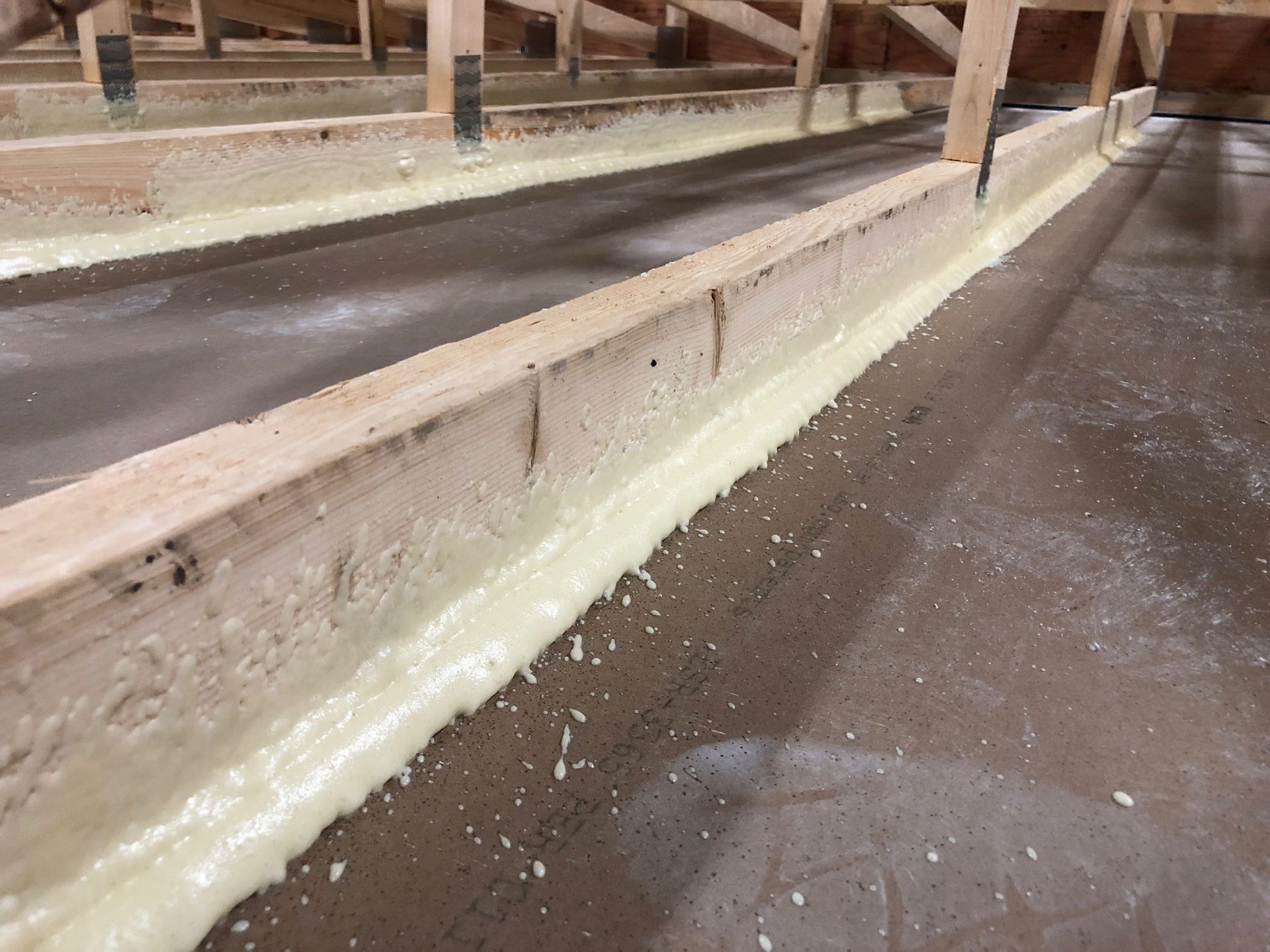
For large-surface applications, like ceiling to rafter attachments, spray foam adhesives can be applied.
Image courtesy of Amrize Building Envelope.
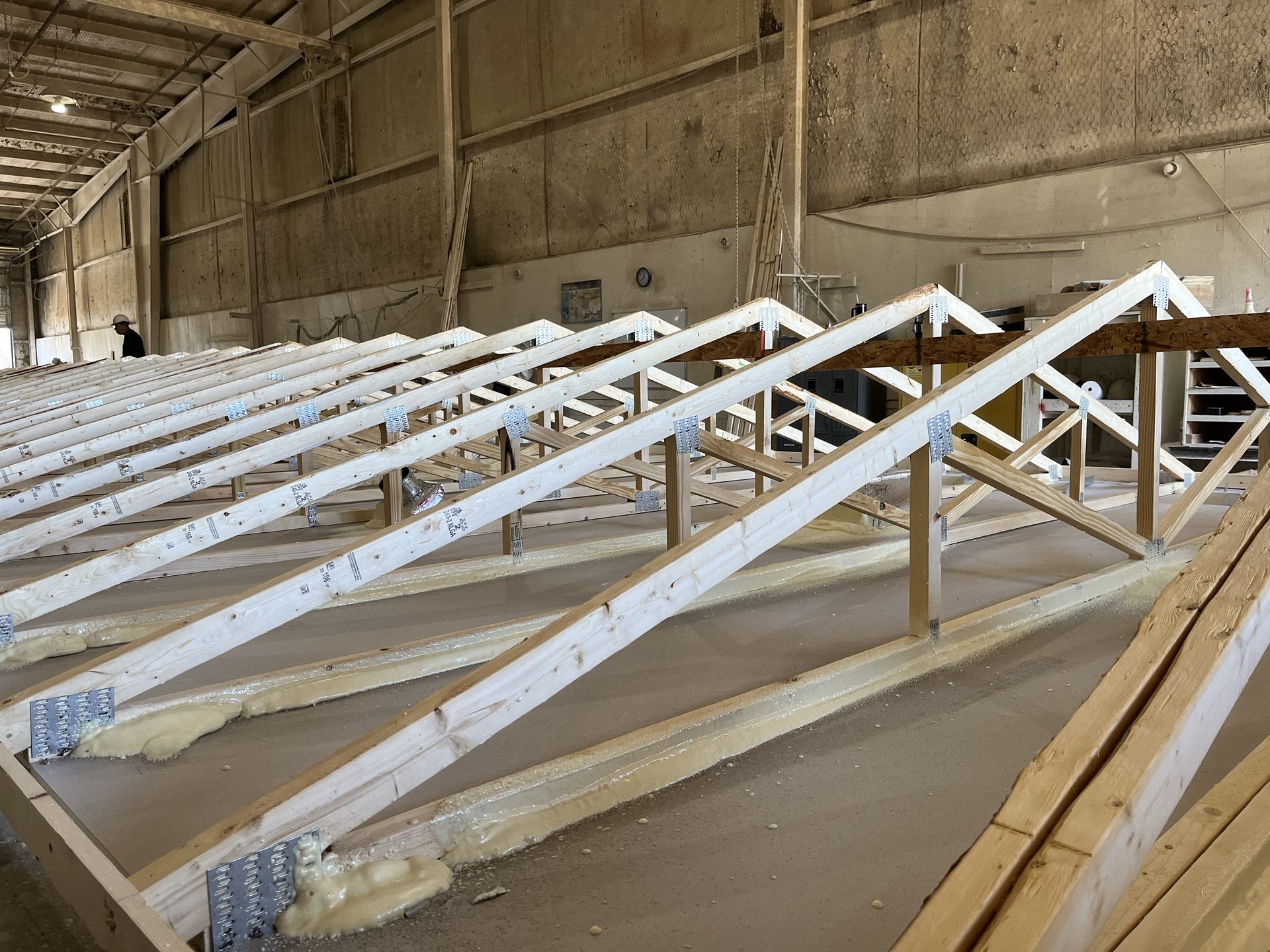
Large-surface application of spray-foam adhesives in manufactured home construction.
Image courtesy of Amrize Building Envelope.
Accelerating Production While Enhancing Precision
The most immediate impact of a well-planned adhesive strategy is on the production line itself. Mechanical fastening is a labor-intensive process. Adhesives can replace the need for multiple individual fasteners with a single, efficient application.
For large-surface applications like ceiling-to-rafter and exterior wall attachments, modern spray foam adhesives like GacoBond Foamseal F2100 can be applied, creating a complete bond that is ready for the next station.
For smaller or more precise joins, such as interior wall attachments or subfloor systems, PVA- and polyurethane-based adhesives such as GacoBond Gun n Go can provide quick grab and high-strength bonding. For larger interior and exterior wall attachment applications, products such as GacoBond Foamseal F6400-LVR may also be used.
These adhesives simplify and speed up production, reducing time and lowering associated labor costs. More importantly, it replaces the point-load stress of a nail or screw with a continuous, monolithic bond. This full-surface contact distributes loads evenly, creating a more rigid, durable, and precise structure that is better equipped to handle the rigors of transport and deliver a squeak-free, high-quality experience for the homeowner.
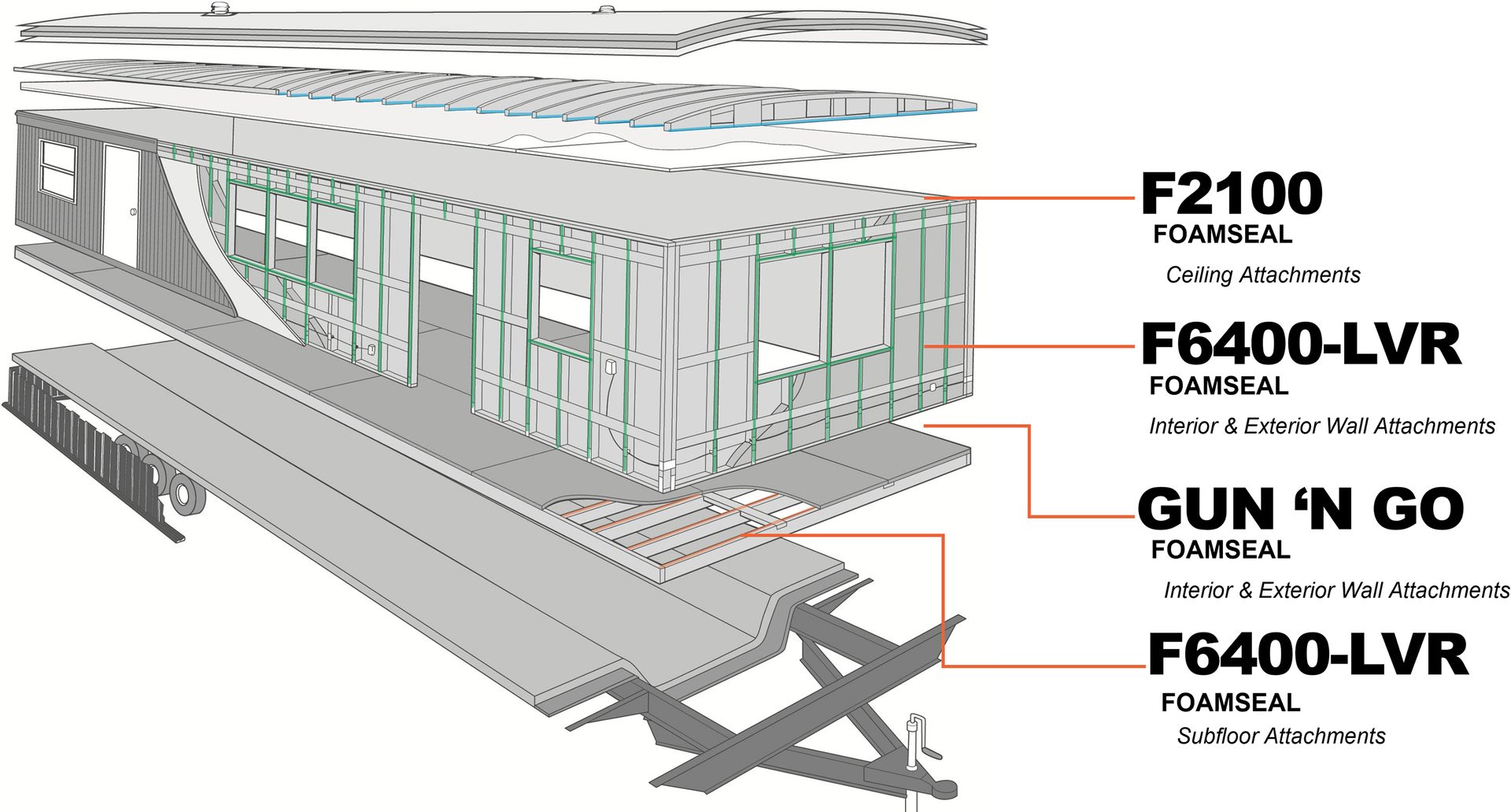
Adhesive solutions for manufactured home construction include subfloor attachments, interior and exterior wall attachments, and ceiling attachments.
Image courtesy of Amrize Building Envelope.
Building in Performance: From Thermal Bridging to Code Compliance
While speed is a primary driver, the performance benefits of adhesives are what make them a truly strategic tool.
Every mechanical fastener that penetrates the building envelope creates a thermal bridge. A small but significant pathway for heat and cold to travel, compromising the home's energy efficiency. Many polyurethane-based foam adhesives are closed-cell, meaning the adhesive itself adds insulation value (R-value) to the assembly. This continuous, insulated bond creates a tighter, more energy-efficient building envelope, making it far simpler to meet and exceed modern energy codes.
The Science of a Smarter, Safer Bond
Today's adhesives are sophisticated, engineered solutions designed for the factory environment. The choice of chemistry is critical for performance and compliance.
Leading solutions are polyurethane-based and formulated without CFC or HCFC blowing agents. They are optimized for both environmental safety and performance, with a specific focus on indoor air quality.
For an industry governed by a complex regulatory landscape, compliance is non-negotiable. Modern adhesives are formulated to meet the strictest standards, including:
- VOC Compliance: Low-VOC options are essential for indoor applications, adhering to regulations like the SCAQMD (South Coast Air Quality Management District), California Air District Regulations, and the Ozone Transport Commission (OTC) Rule.
- Sustainability: Many products are GreenGuard Certified for low chemical emissions and can contribute points toward LEED building certifications.
- Safety Standards: Adhesives are rigorously fire-tested as part of a complete, code-compliant assembly to ensure they maintain the structure's fire-resistance rating.
- Building Codes: ICC-ES certified products comply with the applicable building codes.

Credit: uptonpark / iStock via Getty Images Plus
Smarter Bonds for Smarter Builds
Adhesive selection matters. Different manufactured housing applications require different adhesive chemistries and delivery methods. Spray-applied polyurethane foam adhesives are often used for large-area bonding applications such as ceiling and wall attachments, while moisture-cured polyurethane adhesives and PVA-based formulations can provide advantages in flooring, wall assembly, and other precision bonding applications. Selecting the appropriate adhesive depends on factors such as substrate compatibility, required bond strength, production speed, environmental conditions, and applicable code requirements.
Examples of Adhesive Technologies Used in Manufactured Housing
- GacoBond Foamseal F2100: Two-component polyurethane foam adhesive commonly used for ceiling and wall attachment applications.
- GacoBond Foamseal F6400-LVR: Moisture-cured polyurethane structural adhesive used in flooring and wall assembly applications.
- GacoBond Gun n Go: PVA-based adhesive used in fabricated wall systems and other interior bonding applications.
As manufactured housing producers continue balancing production efficiency with increasingly demanding performance requirements, adhesives are evolving from a supplementary assembly aid into a strategic component of the manufacturing process. By enabling faster assembly, improving thermal performance, and supporting compliance with modern building standards, advanced adhesive technologies are helping manufacturers meet today's challenges while preparing for tomorrow's demands.
Opening image credit: uptonpark / iStock via Getty Images Plus