FEATURE
Accelerating Collaborative Sustainability in the Tapes Industry
The Chemistry of Collaboration: Innovating Adhesives for Today’s World
Opportunities to increase market share will increase when companies are pre-positioned for growth in a resilient and scalable way.
The Chemistry of Collaboration: Innovating Adhesives for Today’s World
By Lisa Anderson, Founder and President, LMA Consulting Group
By Stephen Hollman, Senior Manager, Application Development, Performance Materials, Ingredients + Specialties from Univar Solutions; and Maajida Darsot, Senior Global Marketing Manager, Performance Materials, Ingredients + Specialties from Univar Solutions
When formulating for adhesives, the goal is to help solve challenges that impact performance, sustainability, and compliance.
In the distribution and adhesives business, formulation is chemistry and collaboration. When formulating for adhesives, the goal is to help solve challenges that impact performance, sustainability, and compliance. Adhesives, sealants, and coatings are the backbone of modern manufacturing and one of the most versatile applications in modern, industrial or residential business. Adhesive formulations and chemistry used determine how well they perform under pressure, resist environmental stress, and meet global regulatory standards. In this article, we will explore the science behind formulation, highlight emerging technologies, and share evidence-based insights to help you innovate with confidence.
Why Formulation Matters
Adhesives and sealants are no longer simple bonding agents. They are engineered systems designed to deliver strength, flexibility, and durability across diverse substrates. Today's market demands require solutions that combine high performance with sustainability and regulatory compliance. VOC reduction, recyclability, and biobased content are becoming essential for formulators to consider.
The adhesives industry has become more dynamic and open to change than ever before. Customers are keen to explore new chemistry options to improve cost, compliance, or performance. In a fast-paced world, needs are evolving quickly, and innovation is no longer optional but expected. Let's dive into the science and innovations shaping the future.
Market Drivers and Global Trends
Across industries such as automotive and construction, to electronics and packaging, there are three key drivers dominating formulation strategies:
- Performance under extreme conditions: Adhesives must maintain shear and peel strength under heat, moisture, and chemical exposure. Sealants need elasticity and recovery for dynamic joints. Coatings require barrier properties against UV, oxygen, and aggressive chemicals.
- Sustainability and biobased chemistry: Global regulations such as EU REACH and EPA VOC limits push formulators toward low-VOC, halogen-free, and biobased solutions. Consumers and OEMs alike demand materials that reduce environmental impact without sacrificing performance.
- Multi-functionality: Hybrid systems combining adhesion, sealing, and coating properties are gaining traction. These solutions simplify the application and reduce material waste.
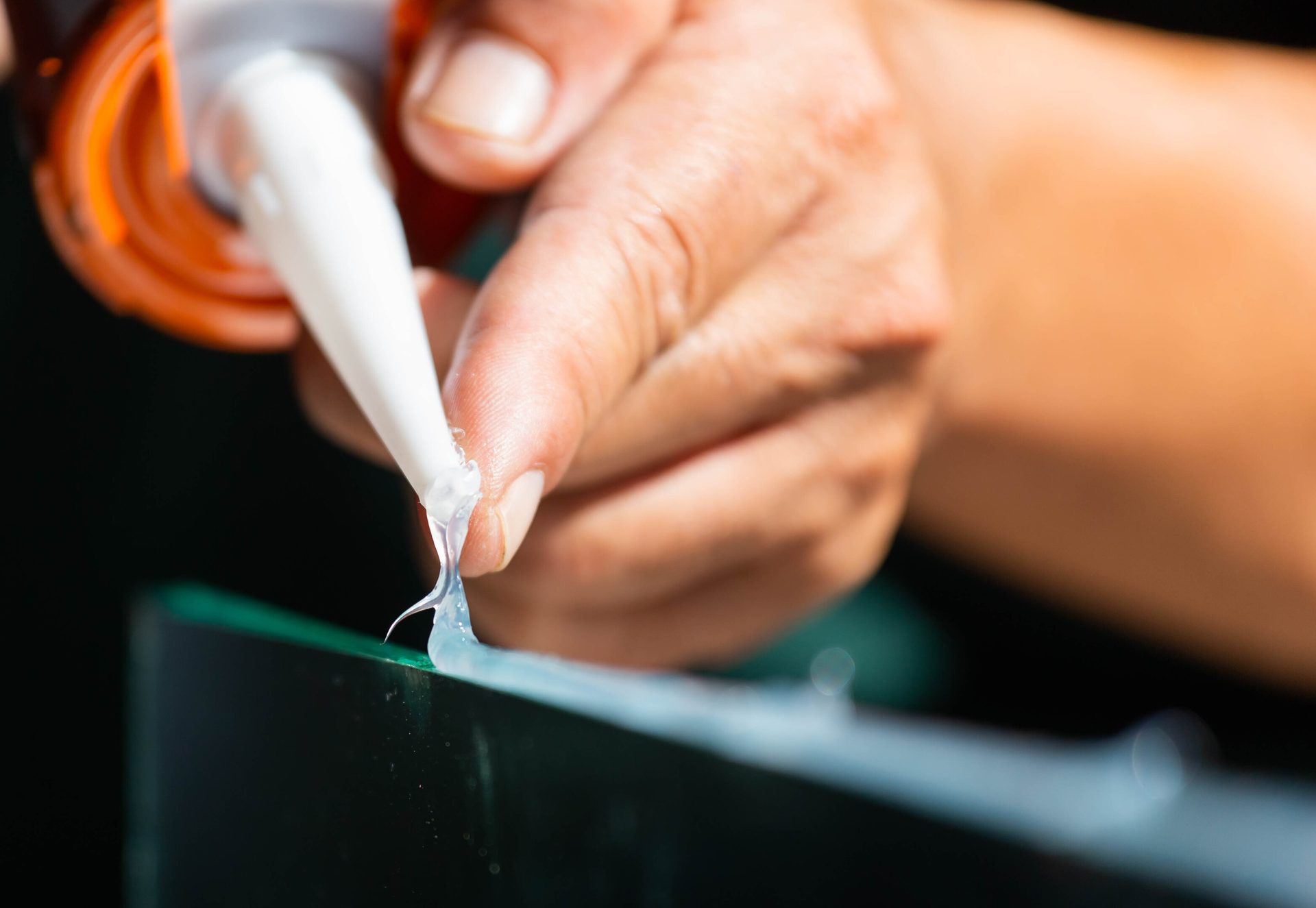
Image courtesy of undefined undefined / iStock / Getty Images Plus.
The Science Behind Formulation
Formulation begins with polymer chemistry. Adhesives rely on a range of primary polymers, each offering unique benefits: SBS and SEBS for flexibility and toughness, acrylics for clarity and weatherability, epoxies for structural strength, urethanes for elasticity, silicones for temperature resistance, and APAO for cost-effective hot-melt systems. Crosslinking mechanisms, whether moisture-curing, heat-curing, or UV-curing, can determine final properties such as hardness, elongation, and chemical resistance.
Additives also play a critical role in tailoring performance:
- Tackifiers enhance initial adhesion
- UV absorbers and antioxidants protect polymers from degradation and improve heat resistance
- Adhesion promoters like silanes strengthen bonding to challenging substrates
- Fire retardants ensure compliance with safety standards
Customers today are eager to hear about these options because they want to be creative in solving cost pressures, meeting compliance requirements, and achieving better performance. This openness to innovation is reshaping how we approach formulation. There are many more options for formulating adhesives, depending on the performance profile you need.
Advanced Technologies and Innovations
Innovation is where science meets application. Here are some breakthroughs shaping next-generation formulations:
1. Silyl-modified polymers for toughness and adhesion
Silyl-modified polymers offer strong chemical bonding to metals and polar substrates. Moisture-curing capability adds durability for outdoor and structural applications. These chemistries excel in automotive bonding, parquet adhesives, and industrial sealants.
2. Underwater epoxy curing agents
New epoxy curing agents that mix and cure under water are ideal for marine infrastructure and emergency repairs. This technology addresses a growing trend for water-resistant adhesives and coatings.
3. Polyurethane sealants with enhanced weatherability
Butylene oxide-based polyols enable sealants with hydrophobicity, resistance to hydrocarbons and acids, and improved weatherability. Their low viscosity simplifies processing for one- and two-component systems, making them highly attractive for construction and industrial markets.
4. Biobased tackifiers for renewable performance
Bio-renewable tackifiers based on phenolic resin chemistry are increasingly used to enhance adhesion in pressure-sensitive and EVA hot-melt adhesives. When combined with other resin systems, these tackifiers improve overall bond strength and temperature performance.
5. Moisture-curing polymers without isocyanates
Silyl-modified moisture-curing polymers mimic polyurethane performance without hazardous isocyanates. SMP technology offers elasticity, tear strength, and recovery for applications like automotive windscreen bonding, building sealing, and waterproof coatings.
What these innovations signal is a shift in how we think about formulation. It is no longer about selecting a single polymer or additive, but taking a look at the whole system to achieve multi-functional performance. For example, pairing silyl-modified polymers with advanced adhesion promoters can create bonds that withstand extreme environments, while integrating UV absorbers and antioxidants extends service life in outdoor applications. Similarly, combining biobased tackifiers with high-performance polyols allows formulators to meet sustainability targets without compromising strength or processability. This systems-level approach is where the strength of this industry lies.
Image courtesy of Garsya / iStock / Getty Images Plus.
Sustainability and Compliance
Formulators are increasingly incorporating biobased rosin ester tackifiers and using halogen-free flame retardants such as zinc borate to reduce environmental impact while maintaining flame resistance.
Circular economy principles are influencing formulation strategies. From renewable raw materials to low-carbon manufacturing, every step matters. For example, phenolic and rosin ester tackifiers support sustainability initiatives without sacrificing performance.
Future Outlook of Adhesives
Looking ahead, the packaging and construction industries in North America will continue to drive demand for advanced adhesives and sealants. The adhesives and sealants sector is an ever-evolving industry by demanding solutions that deliver durability, efficiency, and compliance while aligning with evolving regulatory changes.
This shift is creating an opportunity for formulators to lead, not just react. Success will come from anticipating change, embracing new chemistries, and designing systems that meet multiple objectives at once.
Packaging requires solutions that balance cost efficiency with recyclability and food safety compliance. Construction demands materials that withstand extreme weather, offer long-term durability, and meet evolving building codes. Both sectors are pushing for innovation that combines sustainability with performance and formulators who embrace this challenge will lead the way.
Innovating for Tomorrow
Formulation is the foundation of performance, compliance, and sustainability and the common theme you see with adhesives is that all of these three components are needed for a successful, reliable product. Distributors and industry partners like Ingredients + Specialties from Univar Solutions work to help solve your technical and supply challenges with you. By combining science, innovation, and partnership, we help you create adhesives and sealants that enhance modern life and make the world a better place. The technical expertise is not hard to find. Innovating with confidence is all about using the right tools and having the right support to deliver. Together, we can help shape the future of adhesives.
To learn more about Ingredients + Specialties from Univar Solutions, visit univarsolutions.com/CASE.
Opening image courtesy of Nadzeya Haroshka / iStock / Getty Images Plus.